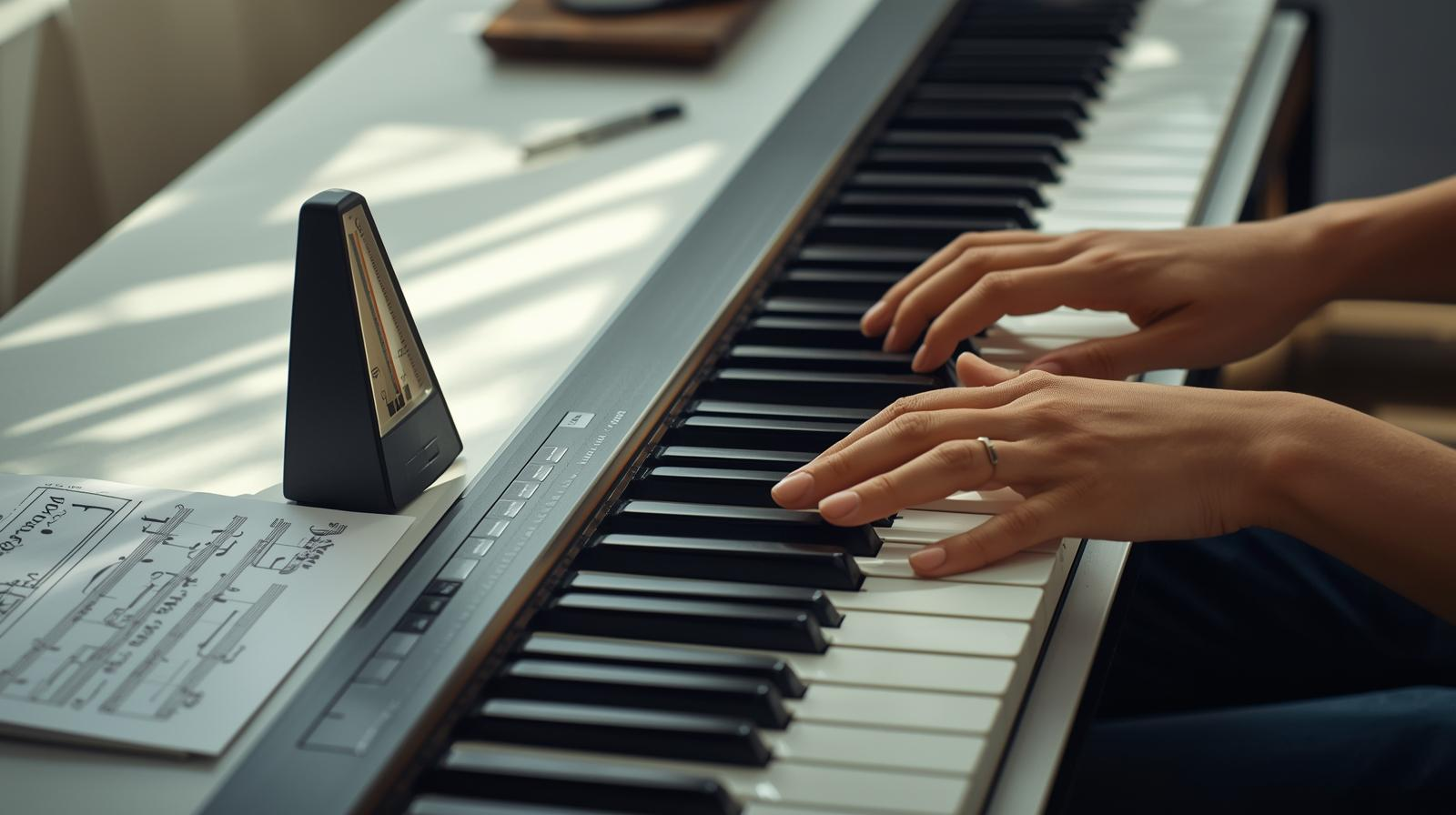
For most beginners, finding time to practise piano is the biggest obstacle to progress. Between work, family, and everything else, sitting down for an hour every day simply isn’t realistic. The good news is that it doesn’t need to be. Twenty minutes of focused, structured practice every day will produce better results than occasional longer sessions, and this guide shows you exactly how to use that time.
Why Short Daily Practice Works Better Than Long Occasional Sessions
Motor skills develop through repetition over time, not through volume in a single sitting. When you practise piano, your brain is forming and strengthening neural pathways that control finger movement, timing, and coordination. This process happens most effectively with regular, consistent repetition rather than infrequent marathon sessions.
Think of it like physical exercise. A twenty minute run every day builds fitness far more effectively than a three hour run once a week. Piano practice works the same way. Consistency is everything.
Research on skill acquisition consistently supports this. Regular short practice sessions lead to faster progress, better retention, and lower rates of frustration and dropout among beginner musicians.
The 20 Minute Practice Structure for Beginners
The key to making short practice sessions effective is structure. Going to the piano and playing through things you already know feels productive but rarely is. Here is a simple structure that works for complete beginners:
Minutes 1 to 5: Warm Up
Start with scales. If you’re very new, just play the C major scale up and down with your right hand, then your left hand, then both together. Keep it slow and even. This warms up your fingers, reinforces your knowledge of the keyboard, and gets your brain into practice mode.
As you progress, add one new scale each week following the circle of fifths. Your teacher will guide you on when to move on.
Minutes 5 to 10: Technique Work
This is the part most beginners skip, and it’s the part that makes the biggest difference. Spend five minutes on a specific technical challenge, not a piece of music, but an exercise targeting a weak area.
Common examples include Hanon finger independence exercises, chord transitions, or a specific rhythm pattern you’re finding difficult. If you’re taking lessons, your teacher should give you a specific technique focus for each week.
Minutes 10 to 20: Current Piece
Spend the remaining ten minutes on whatever piece you’re currently learning. But don’t just play through it from start to finish. That’s the most common and least effective way to practise.
Instead, identify the hardest section and work on that first. Play it hands separately at a slow tempo, then hands together slowly, then gradually increase the speed only when it feels clean. Use a metronome throughout. A free online metronome such as the one at metronome-online.com works perfectly well if you don’t have a physical one.
The rule is simple: if you make more than two or three mistakes in a section, slow down. Speed is the enemy of progress at this stage.
What to Do When You Have More Time
On days when you have 30 or 40 minutes available, don’t just extend the free play section. Instead add a second piece, ideally one slightly below your current level that you can play more fluently. Playing something you know well builds confidence, reinforces technique, and is genuinely enjoyable, which matters more than people realise for long term motivation.
You can also use extra time to do some basic music theory. Understanding what you’re playing, why certain chords sound the way they do, and how scales relate to the pieces you’re learning makes you a faster and more musical player overall.
Common Piano Practice Mistakes Beginners Make
Even with good intentions, most beginners fall into the same traps. Here are the most frequent ones and how to avoid them:
Practising too fast is the number one problem. Slow practice feels unproductive but it’s where real learning happens. Your fingers are building muscle memory, and if that memory is built at the wrong speed or with mistakes, those mistakes become part of what you’ve learned.
Always playing from the beginning is another. Most beginners restart from bar one every time something goes wrong, which means the opening of a piece gets practised twenty times and the difficult section in the middle gets practised twice. Start from the problem, not the beginning.
Skipping days and doubling up doesn’t work. Missing a day and practising for forty minutes the next day does not compensate. The benefit of daily practice comes from the overnight consolidation that happens while you sleep. This is when your brain processes and stores what you practised, which is why things often feel easier the morning after a practice session than they did the evening before.
Tracking Your Progress
One of the most motivating things you can do as a beginner is keep a simple practice journal. Write down what you worked on, what felt difficult, and what improved. Over weeks and months this becomes a clear record of real progress, which is enormously helpful on days when it feels like you’re not getting anywhere.
At Digital Music Tutors, every student has access to our Learning Management System which tracks practice activity, stores lesson recordings, and provides structured exercises between sessions. This removes the guesswork from piano practice for beginners and ensures every session is purposeful.
A Note on Practice Quality
Twenty minutes of genuinely focused practice, where you’re actively listening, correcting mistakes, and working on specific challenges, is worth more than an hour of mindless repetition. The difference between practising and playing through is enormous, and making that distinction early is one of the biggest advantages you can give yourself as a beginner.
If you’re unsure whether you’re practising effectively, that’s exactly what lessons are for. A good teacher doesn’t just assign pieces, they teach you how to practise them. This is one of the most underrated benefits of taking lessons rather than learning alone.
Ready to start practising with purpose? [Book a free consultation] and we’ll put together a practice plan tailored to your schedule, your goals, and your current level.


Comments are closed